


A plastic cap is a small component with several jobs: contain the product, fit the container, open predictably, and sometimes provide tamper evidence or repeated reclosure. Its mold must reproduce the features that support those functions consistently, including threads, sealing surfaces, hinges, and retaining details.
This guide focuses on injection molds for caps and closures. Begin with the complete package, including the bottle or container neck, rather than treating the cap drawing as an isolated part specification.
How an injection cap mold works
Molten resin enters the closed tool through its feed system and gates. The cavity and core establish the closure geometry. Packing compensates for material shrinkage while the gate remains open, and cooling allows the cap to become sufficiently stable for release. The tool then opens, releases any retained features, and ejects the part.
A multi-cavity mold repeats that sequence across many impressions. Consistent filling, thermische Steuerung, and alignment are important because a problem confined to one cavity can still produce a recurring stream of defective closures. Husky’s closure tooling overview highlights alignment, seal-area flash control, and access for maintenance as production concerns.
Choose the thread-release method early
Internal threads and retaining beads can prevent a cap from moving straight off its core. The release approach therefore belongs in the initial tooling discussion. Depending on the resin and geometry, options may include controlled stripping, an unscrewing mechanism, or a collapsible core. A stripping design requires enough temporary deformation without unacceptable damage or permanent distortion.
Unscrewing tools release a threaded feature through relative rotation. Collapsible cores withdraw inward to clear suitable internal undercuts before ejection. Their feasibility depends on the available space and the feature depth; they are not interchangeable solutions for every cap. DME’s collapsible-core guide illustrates how geometry governs the mechanism.
Coordinate material, sealing, and cooling
The resin affects stiffness, shrinkage, opening feel, and the behavior of hinges or flexible sealing features. Polypropylene and polyethylene grades are used in closure applications, but a resin-family name is not a complete specification. Borealis’s closure material information covers purpose-developed grades for different packaging needs.
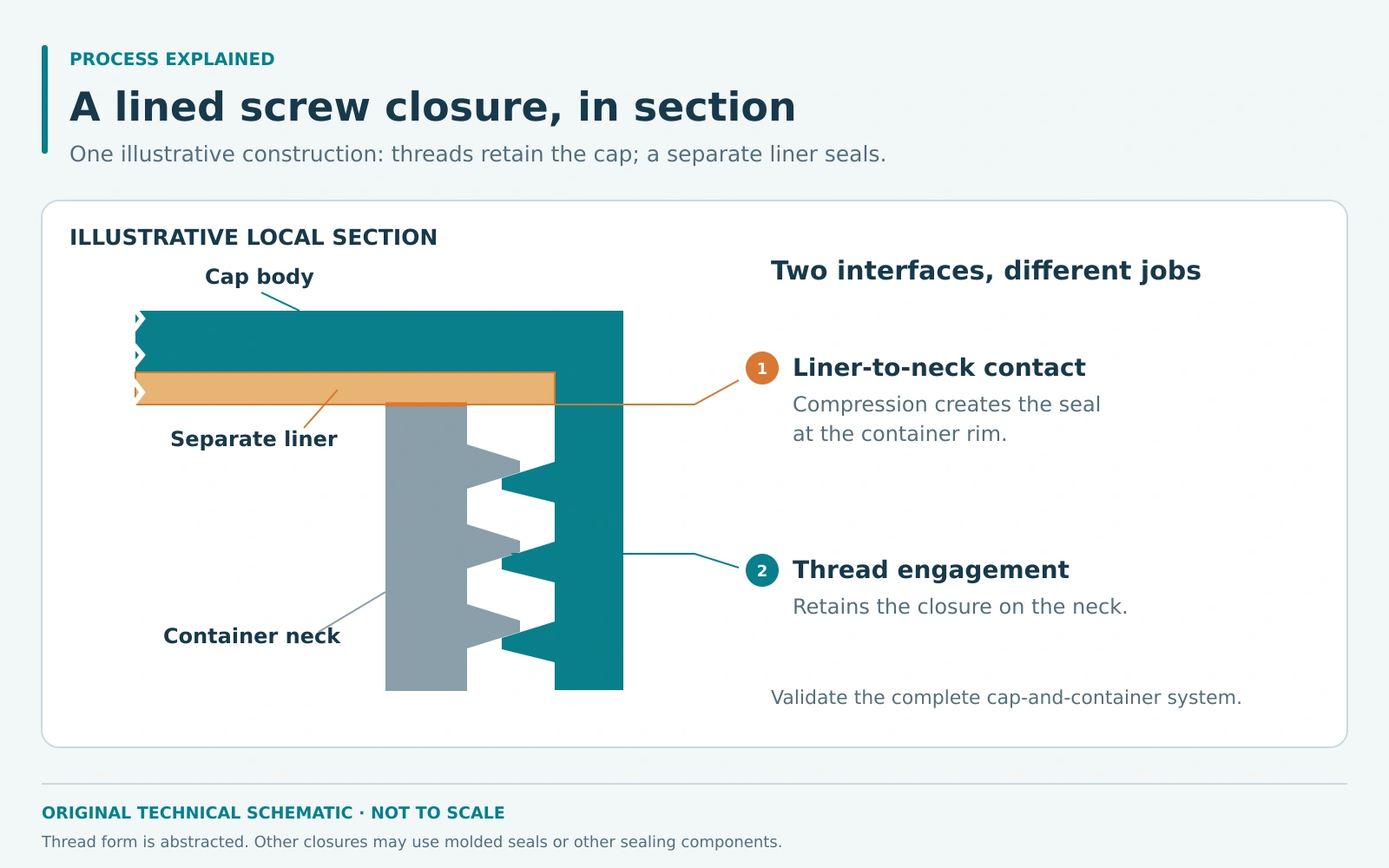
Specify the exact grade, color system, permitted material substitutions, and relevant application requirements. Confirm whether sealing is provided by a molded feature, a separate liner, or another package component. Review these choices with the mating neck dimensions and expected filling conditions.
Cooling and feed-system design should support stable dimensions across cavities. For tooling review, request clear access for cleaning and replacement of wear components. Adding cavities can increase potential output, but it also increases the importance of consistent operation and serviceability.
Plan for operations after molding
Tamper-evident features are not always completed inside the mold. Depending on the closure design, bridges may be molded directly or created through downstream slitting. Some bands require folding after molding. SACMI’s slitting and folding explanation describes these alternatives.
Include any slitting, folding, lining, hinge closing, assembly, and inspection steps in the manufacturing plan. An attractive mold-cycle estimate does not by itself establish the finished-closure output or total conversion cost.
Validate the complete package
Check molded closures on representative containers. Relevant tests may include leakage, application and removal torque, tamper-band behavior, and hinge life. Cavity identification helps distinguish a recurring tooling issue from variation elsewhere in the packaging process.