General-purpose thermoplastics通用热塑性塑料
PE, PP, PVC, GPPS, HIPS and ABS provide a broad starting point for everyday components. Compare stiffness, impact demands, chemical exposure and appearance before narrowing the selection.



A complete tooling specification
Choose the resin, mold steel, hot runner, standard components and mold base as one connected system. Compare the engineering questions behind each choice and define a specification that can be quoted and maintained.
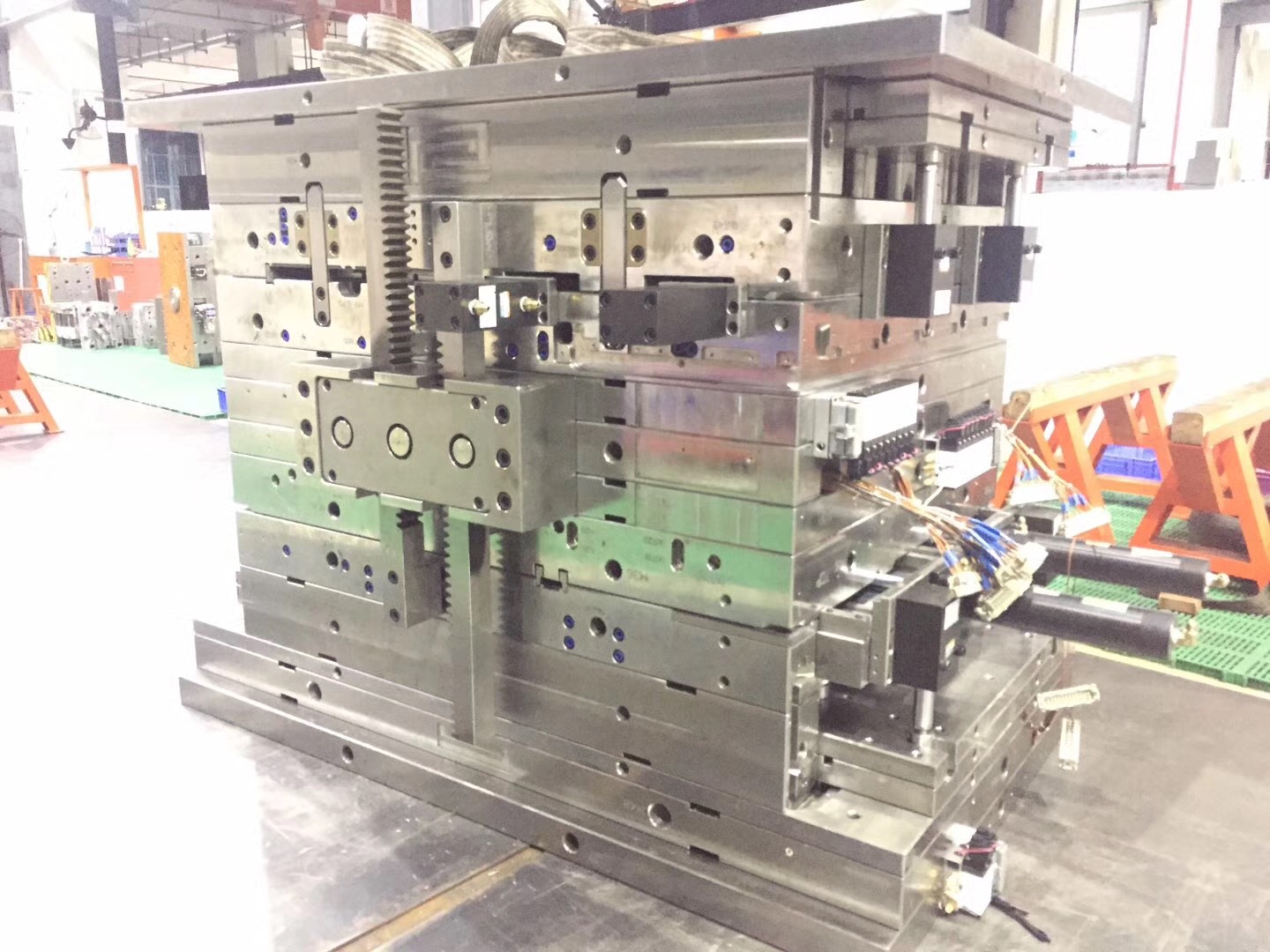
Define the part’s function, service environment, Aussehen, critical dimensions and expected production demand. Then agree the resin grade, tooling specification, machine interfaces and validation plan. Review lifetime cost alongside initial investment, including maintenance, replacement parts, changeovers and future tool transfers.
MATERIALS & TOOLING
Use this reference to compare polymer families, decode material abbreviations and prepare a drawing or RFQ. Start with the application, then identify the manufacturer, exact grade, color and reinforcement. A polymer name describes the material family; it does not by itself identify an injection-molding grade.
These groups help organize the discussion rather than define a rigid ranking. Grade design, reinforcement and operating conditions can matter more than the family label.
PE, PP, PVC, GPPS, HIPS and ABS provide a broad starting point for everyday components. Compare stiffness, impact demands, chemical exposure and appearance before narrowing the selection.
PA, POM, PC, PC/ABS, PBT, PET and PMMA offer different balances of mechanical, thermal, electrical or optical performance. Check the intended duty, conditioning and dimensional requirements.
PPS, LCP, PEEK, PEI, PSU and PPSU are considered for more demanding environments or specialized processing needs. Higher-temperature capability alone does not establish suitability for the finished product.
PF, EP, UP and MF cure into a crosslinked structure. They require a suitable compound and curing process; they are not interchangeable with melt-processable thermoplastics. SMC and BMC describe compound formats, not one resin chemistry.
The table includes parent families and useful subtypes. Scroll within the table to compare all 30 entries; on a phone, swipe sideways to read the complete row.
| Material | Full name / 中文名称 | Group | Selection starting point |
|---|---|---|---|
| PE | Polyethylene聚乙烯 | General-purpose | A family of lightweight, chemically resistant plastics; flexibility and stiffness vary by type. |
| HDPE | High-density polyethylene高密度聚乙烯 | General-purpose | Generally stiffer than LDPE, with useful toughness and chemical resistance. |
| LDPE | Low-density polyethylene低密度聚乙烯 | General-purpose | Soft and flexible; clarity depends on thickness, grade and processing. |
| LLDPE | Linear low-density polyethylene线性低密度聚乙烯 | General-purpose | Tough and flexible, with strong tear and puncture performance in film applications. |
| PP | Polypropylene聚丙烯 | General-purpose | Lightweight and chemically resistant; selected grades suit repeated flexing and living hinges. |
| PP-H | Polypropylene homopolymer均聚聚丙烯 | General-purpose | Typically selected for stiffness; low-temperature impact resistance can be limited. |
| PP random copolymer / PP-R | Polypropylene random copolymer无规共聚聚丙烯 | General-purpose | Often selected for improved clarity and toughness compared with homopolymer PP. |
| PP impact copolymer | Polypropylene impact copolymer抗冲共聚聚丙烯 | General-purpose | Impact-modified structure improves toughness, including at lower temperatures in suitable grades. |
| PVC | Polyvinyl chloride聚氯乙烯 | General-purpose | Available as rigid or plasticized flexible compounds; performance depends strongly on formulation. |
| GPPS | General-purpose polystyrene通用聚苯乙烯(透苯) | General-purpose | Clear and rigid, but relatively brittle; used where impact demands are limited. |
| HIPS | High-impact polystyrene高抗冲聚苯乙烯(改苯) | General-purpose | Rubber-modified polystyrene with improved toughness and an opaque appearance. |
| ABS | Acrylonitrile butadiene styrene丙烯腈-丁二烯-苯乙烯共聚物 | General-purpose | Balanced stiffness, impact strength and surface appearance; dedicated grades support plating. |
| PA6 | Polyamide 6 / Nylon 6聚酰胺6 / 尼龙6 | Engineering | Tough, wear-resistant engineering resin; moisture conditioning affects size and mechanical properties. |
| PA66 | Polyamide 66 / Nylon 66聚酰胺66 / 尼龙66 | Engineering | Useful strength, wear resistance and elevated-temperature performance; moisture and reinforcement affect behavior. |
| POM | Polyoxymethylene / Acetal聚甲醛 | Engineering | Stiff, low-friction resin widely used for gears and sliding components; shrinkage needs careful control. |
| PC | Polycarbonate聚碳酸酯 | Engineering | High impact strength with transparent grades and useful heat resistance. |
| PMMA | Polymethyl methacrylate / Acrylic聚甲基丙烯酸甲酯 / 亚克力 | Engineering | Useful clarity, surface hardness and weather resistance; impact-modified and light-diffusing grades have different property balances. |
| PC/ABS | Polycarbonate / ABS blendPC/ABS合金 | Engineering | Combines toughness, heat resistance and moldability; plating and flame-retardant options are grade-specific. |
| PBT | Polybutylene terephthalate聚对苯二甲酸丁二醇酯 | Engineering | Crystalline polyester with useful electrical properties; reinforced grades suit rigid technical parts. |
| PET | Polyethylene terephthalate聚对苯二甲酸乙二醇酯 | Engineering | Polyester used in packaging and engineering compounds; drying and crystallization control are important. |
| PPS | Polyphenylene sulfide聚苯硫醚 | High-performance | Selected for heat and chemical resistance; commonly supplied in reinforced compounds. |
| LCP | Liquid crystal polymer液晶聚合物 | High-performance | High flow for thin-wall components with low flow-direction shrinkage; orientation requires careful design. |
| PEEK | Polyetheretherketone聚醚醚酮 | High-performance | High-performance resin for demanding heat, wear and chemical environments; application suitability is grade-specific. |
| PEI | Polyetherimide聚醚酰亚胺 | High-performance | Amorphous high-heat resin; standard unfilled grades are commonly transparent amber. |
| PSU | Polysulfone聚砜 | High-performance | Transparent high-heat polymer with useful hydrolytic stability; verify exposure and sterilization conditions. |
| PPSU | Polyphenylsulfone聚苯砜 | High-performance | Tough high-heat polymer with strong hot-water and steam resistance in appropriate grades. |
| PF | Phenol-formaldehyde resin / Phenolic resin酚醛树脂(电木) | Thermoset | Cured thermoset compounds used for heat-resistant and electrically insulating components. |
| EP | Epoxy resin环氧树脂 | Thermoset | Curing resin systems used in composites, encapsulation and electrical insulation. |
| UP | Unsaturated polyester resin不饱和聚酯树脂 | Thermoset | Thermosetting resin used in reinforced composites, including many SMC and BMC formulations. |
| MF | Melamine-formaldehyde resin三聚氰胺-甲醛树脂(密胺树脂) | Thermoset | Thermoset resin used where hard, durable surface performance is important. |
These published supplier examples show why the complete designation matters. They are reference examples, not interchangeable alternatives or a statement of stocked materials.
| Resin | Published grade example | What the designation establishes | Reference |
|---|---|---|---|
| ABS | CHIMEI POLYLAC PA-727 | Electroplating grade. The PA prefix is part of this ABS product name; it does not mean polyamide. | Supplier data |
| PA66-GF30 | BASF Ultramid A3EG6 | Glass-fiber-reinforced PA66. Do not specify it as unfilled PA66 or substitute another suffix without review. | Supplier data |
| POM | Polyplastics DURACON M90-44 | Standard POM grade. Keep both the producer and full designation instead of a generic M90 label. | Supplier data |
| PC | Covestro Makrolon 2407 | Polycarbonate example with published directional mold-shrinkage data shown below. | Supplier data |
| PC/ABS | SABIC CYCOLOY C2800 | Flame-retardant PC/ABS example. Any required rating must match the grade, color, thickness and documentation. | Supplier data |
| PBT-GF30 | BASF Ultradur B4300 G6 | Glass-fiber-reinforced PBT with distinct flow and transverse shrinkage. | Supplier data |
| PEEK | Victrex 450G | Unfilled PEEK example for industrial material comparison; the designation is not an implant-grade approval. | Supplier data |
| PPSU | Syensqo Radel R-5100 | Opaque general-purpose PPSU example. Family-level transparency does not make every grade transparent. | Supplier data |
A suffix can describe reinforcement or a performance modification, but supplier naming conventions vary. Confirm the complete compound and its data sheet.
| Mark | Meaning / 中文 | What to specify |
|---|---|---|
| GF10 / GF20 / GF30 | Glass-fiber reinforced玻璃纤维增强 | Usually 10/20/30% glass fiber by mass; confirm the grade designation and TDS. |
| FR | Flame-retardant modified阻燃改性 | Specify the required tested classification and thickness; FR alone is not a rating. |
| UV | UV-stabilized抗紫外线稳定 | Intended to improve weathering performance; confirm exposure and color-retention requirements. |
| MD / mineral-filled | Mineral-filled compound矿物填充 | Supplier shorthand varies; identify mineral type and loading in the specification. |
| CF | Carbon-fiber reinforced碳纤维增强 | Changes stiffness, thermal expansion and electrical behavior; verify the exact compound. |
| ESD | Electrostatic-discharge control静电放电控制 | Specify required surface/volume resistivity and test conditions. |
Polymer family + manufacturer and full grade + color + reinforcement + required performance documentation.
Example format: PA66-GF30 / [manufacturer] [grade] / black / [required performance specification]. Identify approved substitutions separately.
Mold shrinkage depends on the compound, wall thickness, gate and flow direction, packing, mold temperature and conditioning. The examples below retain the supplier’s test context so that directional differences stay visible.
| Material and example grade | Published linear shrinkage | Method and test context | Reference |
|---|---|---|---|
| ABS — INEOS Styrolution Terluran GP-22 | 0.4–0.7% | ASTM D955 linear mold shrinkage; converted from 0.004–0.007 in/in | Original supplier data |
| PC — Covestro Makrolon 2407 | 0.65% parallel / 0.70% transverse; supplier practical range 0.50–0.70% | ISO294-4, 60×60×2mm, 500bar; practical range separately designated by supplier | Original supplier data |
| PA66 — BASF Ultramid A3K | 1.50% parallel / 1.80% transverse | ISO294-4; constrained model-housing result is separately 0.95%, not interchangeable | Original supplier data |
| PA66-GF30 — BASF Ultramid A3EG6 EQ | 0.50% parallel / 1.10% transverse | ISO294-4; exact EQ grade; not a universal PA66-GF30 value | Original supplier data |
| PBT-GF30 — BASF Ultradur B4300 G6 | 0.34% parallel / 1.07% transverse | ISO294-4, March2024 product information | Original supplier data |
| PEEK — Victrex 450G | 0.90% flow / 1.30% across flow | ISO294-4; 375°C nozzle, 190°C tool | Original supplier data |
Parallel / flow and transverse / across-flow values describe different directions. These are supplier test results for named grades, not family-wide ranges or a fixed setting for cutting a mold.
Glass-fiber orientation can create substantially different flow and transverse shrinkage. The PA66-GF30 and PBT-GF30 examples show why a single low shrinkage number should not be applied to every dimension.
For nylon, distinguish dry-as-molded and conditioned dimensions. Moisture uptake can change size and stiffness. Record how critical features will be conditioned and measured before comparing them with the drawing.
When linear mold shrinkage is defined relative to the cavity dimension, use the exact inverse below. Keep all dimensions in the same units.
s = (C − D) / C → C = D / (1 − s)
C = D / (1 − S / 100)
Illustrative arithmetic: D = 100 mm and S = 2% give C = 100 / 0.98 ≈ 102.041 mm. The shortcut D × (1 + s) gives 102.000 mm; it is a first-order approximation.
The example explains the calculation. Final tool sizing still requires the selected grade, relevant directions and conditions, dimensional requirements and trial validation.

A protective window, diffuser, light guide and lens need different acceptance criteria. Define the relevant light path, transmission, haze, color and optical checks alongside the mechanical requirements. Grade, tint, thickness and processing all belong in that discussion.
MATERIALS & TOOLING
Choose mold steel around the resin, expected production volume, surface finish, corrosion exposure and maintenance needs. The following guide separates standard grade references from branded products and shows selected, source-specific hardness and heat-treatment information for RFQ discussions.
A standard designation and a branded product name are different pieces of a specification. Use the reference names below to start a comparison, then order the exact product and condition. They are not a list of automatically interchangeable grades.
Scroll within the table to compare the eight steel groups. Supply hardness is shown only where the named source establishes it.
| Reference names to verify | Named product example | Application considerations | Supplied condition / hardness | Specification point & source |
|---|---|---|---|---|
| S136; 1.2083; 420-type referencesCorrosion-resistant plastic mold steel | Uddeholm Stavax ESR (separate named-product example) | Polished cavities, transparent plastic parts and molds exposed to corrosive conditions. | Through-hardening steel; specify delivered condition and final hardness separately. | Treat S136 as a supplier-specific designation. 1.2083 and 420 references do not establish automatic equivalence to a premium ESR product. Confirm the exact brand and certificate. Source 1 · Source 2 |
| 718 family; 1.2738; modified P20Prehardened plastic mold steel | ASSAB 718 Supreme; ASSAB 718 HH | Larger injection molds and cavities requiring a practical balance of machinability, polishability and strength. | 718 Supreme: 290–330 HB. 718 HH: 340–380 HB, supplied hardened and tempered. | 718 Supreme and 718 HH are distinct ASSAB products; the exact suffix and supplied hardness matter. Source 1 · Source 2 |
| P20; 1.2311 referencesPrehardened plastic mold steel | EschmannStahl ES Aktuell, 1.2311 EST (supplier data-sheet example) | General plastic molds and mold frames. | ES Aktuell is supplied at 280–325 HB and intended for use in that condition. | Compare the ordered AISI or European specification and chemistry; do not substitute a nickel-modified 1.2738 product without approval. Source 1 · Source 2 |
| 1.2316; modified 1.2316 productsCorrosion-resistant prehardened mold steel | EschmannStahl ES Antikor, 1.2316 EST modified (supplier example) | Molds processing plastics that can create corrosive conditions. | ES Antikor: 280–325 HB, intended for use in the delivered condition. | Standard 1.2316 and proprietary modified versions need separate data sheets. Source 1 |
| H13; 1.2344; SKD61 referencesHot-work tool steel | Uddeholm Orvar Supreme | Die-casting dies, hot-work tooling and selected demanding plastic mold inserts. | Specify steel quality, final working hardness and heat-treatment acceptance criteria for the application. | ASSAB 8407 Supreme / Uddeholm Orvar Supreme is a named premium H13 product; standard grade names alone do not specify its cleanliness or remelting quality. Source 1 · Source 2 |
| H11; 1.2343 referencesHot-work tool steel | ASSAB Vidar 1 ESR | Hot-work applications and larger plastic molds where toughness and surface quality are important. | Final hardness and acceptance criteria should be agreed for the actual component. | Select the specific maker and product rather than assuming every H11 product uses the same H13 heat-treatment schedule. Source 1 |
| D2; 1.2379; SKD11 referencesCold-work tool steel | ASSAB XW-42 | Wear-resistant cutting, blanking and forming tools; selected tooling for abrasive materials. | XW-42 is normally supplied soft annealed, approximately 240 HB. | Reference-standard similarities are a starting point; exact chemistry and delivery requirements remain part of the order. Source 1 |
| Daido DC53Proprietary cold-work tool steel | Daido DC53 | Precision cold-work tooling requiring a combination of wear resistance, toughness and dimensional stability. | Specify genuine product identity and the required final properties. | DC53 is a Daido proprietary steel, not a JIS standard grade and not simply another name for SKD11. Source 1 · Source 2 |
Technical reference for material selection, not a furnace instruction. Confirm the exact steelmaker, grade, supplied condition, section size and required properties against the current product data sheet and a qualified heat-treatment plan. Temperatures below apply only to the named examples; cycle times, cooling conditions and tempering sequences cannot be transferred automatically between products.
Austenitizing is the specified heating stage before hardening by controlled cooling. Quenching is that cooling operation; tempering follows hardening. Stress relief is a separate treatment. A prehardened block may be machined in its delivered condition instead of being hardened again.
| Exact product | Published thermal reference | Primary source |
|---|---|---|
| Uddeholm Stavax ESR (separate named-product example) | For Stavax ESR only: austenitizing 1000–1050°C, normally 1020–1030°C; the current brochure specifies tempering no lower than 250°C and two tempers. Select final hardness from that product’s tempering curve. | Original data 1 · Original data 2 |
| ASSAB 718 Supreme; ASSAB 718 HH | Normally machine in the supplied prehardened condition. Rehardening is not a default manufacturing step; any stress relief, welding or surface treatment needs the specific product data sheet. | Original data 1 · Original data 2 |
| EschmannStahl ES Aktuell, 1.2311 EST (supplier data-sheet example) | For this named product, supplier guidance lists stress relief at a maximum of 480°C. This is not an austenitizing temperature; consult the full sheet before choosing a cycle. | Original data 1 · Original data 2 |
| EschmannStahl ES Antikor, 1.2316 EST modified (supplier example) | The supplier lists stress relief up to 480°C for this prehardened product. Do not apply a generic 1000°C-class hardening cycle to every 1.2316H block. | Original data 1 |
| Uddeholm Orvar Supreme | Orvar Supreme: austenitizing 1020–1050°C, normally 1020–1030°C. Its brochure requires at least two tempers and warns against the 425–550°C tempering interval. Final hardness determines the qualified cycle. | Original data 1 · Original data 2 |
| ASSAB Vidar 1 ESR | Vidar 1 ESR: austenitizing 990–1010°C, normally 990–1000°C. Its brochure specifies two tempers and identifies reduced toughness when tempering for final hardness in the 425–550°C interval. | Original data 1 |
| ASSAB XW-42 | XW-42: austenitizing 990–1050°C, commonly 1000–1040°C. Tempering temperature is selected from its hardness curve; the sheet specifies at least two tempers and a minimum temperature of 180°C. | Original data 1 |
| Daido DC53 | Daido’s published examples include hardening at 1030°C followed by high-temperature tempering around 520–530°C, with example hardness approximately 62 HRC. These are documented test conditions, not a universal furnace recipe. | Original data 1 · Original data 2 |
Use this directory to locate technical information and identify who supplies what. Brand owner, distributor, mold-base manufacturer and steelmaking plant can be different entities. Confirm the actual mill and batch origin for an order.
| Company / network | Role | Location and origin context | Official reference |
|---|---|---|---|
| Uddeholm / ASSAB | Steelmaker / regional product and distribution network | Uddeholm: Sweden; confirm the actual mill and batch origin. | Reference 1 · Reference 2 |
| Schmiedewerke Gröditz (GMH Group) | Tool-steel producer | Germany | Reference 1 |
| Daido Steel | Producer and owner of the DC53 product designation | Japan; confirm the delivered product origin. | Reference 1 |
| Finkl Steel | Mold, die and forging steel producer | North American operations, including Chicago and Sorel; specify the producing mill. | Reference 1 · Reference 2 |
| Fushun Special Steel | Special-steel producer with tool-and-die steel products | China | Reference 1 |
| Tiangong | Tool-steel producer | China | Reference 1 |
| Baosteel / Baowu steel businesses | Producer reference; specify the actual legal producer and grade | China | Reference 1 |
| Lung Kee Group (LKM) | Mold-base manufacturer and tool-steel supplier, including branded steel ranges | Confirm the original steel producer and origin separately from LKM supply. | Reference 1 |
Names are technical reference examples; inclusion does not indicate an X-Molding inventory commitment or supply agreement.
Include the standard and edition where applicable, exact branded grade if required, producer, permitted substitutions, supplied hardness, target working hardness and any remelting or cleanliness requirements.
Request traceable records and agreed checks for the actual block or insert. Hardness alone does not demonstrate the required toughness, microstructure or cooling performance.
NADCA die-steel procurement and heat-treatment criteria address demanding die-casting applications. State the required document edition, grade/class and tests in the purchase specification. Do not assume all export molds require ESR or that every H13 product has NADCA approval.
Specify the required EN 10204 document type in the purchase order. If Type 3.2 validation is required, agree on the inspection arrangements early. A certificate type does not replace the steel grade specification or establish a universal export requirement.
BSI BS EN 10204:2004 — Metallic products: Types of inspection documents · LRQA EN 10204 Type 3.2 material certification
Brand owner, distributor, mold-base supplier and steelmaking plant may be different entities. Establish the heat number, original mill documentation and actual manufacturing origin for the delivered batch.
MATERIALS & TOOLING
Choose the gating concept and resin compatibility before comparing supplier proposals. Husky Ultra and Mold-Masters Master-Series are examples of established product families with multiple configurations; selection belongs to the application, not the brand name alone.
A non-valved hot-tip system relies on thermal behavior at the gate rather than a moving valve pin. Evaluate gate vestige, Kühlung, temperature balance and the risk of stringing or drooling. Gate geometry and nozzle position are part of the specification.
A moving valve pin controls the gate opening and closing. Supplier options include pneumatic, hydraulic and electric actuation, with sequential operation available in suitable systems. Consider the desired filling sequence together with actuator space, controls and service access.
Heating architecture is a separate choice from gate closure. Internally heated runners use a heated probe or torpedo within an annular melt passage; externally heated designs heat a manifold around its internal flow channels. Heater construction also varies: Mold-Masters documents brazed heaters embedded in component channels, alongside conventional nozzle bands and manifold heater plates. Review temperature uniformity, thermal isolation, expansion allowances and heater serviceability for the proposed configuration. “Valve gate” does not identify how the nozzle and manifold are heated.
Review resin and additives, shot size, cavity layout, flow length, allowable residence time, thermal uniformity, gate location, color changes and acceptable vestige. Confirm controller zones, electrical connections, thermocouples and actuation interfaces. Ask the supplier to confirm the chosen configuration for the exact resin and process. Include spare tips, heaters, seals and valve components in the maintenance discussion.
MATERIALS & TOOLING
Standard components help define a tool that can be built, documented and serviced consistently. Agree the catalogue system and component specification early, particularly when the mold will move between facilities.
| Brand example | Selection focus | What to review |
|---|---|---|
| DME | Mold-component catalogue | Examples include ejector pins, sprue bushings, mold-cooling components and alignment products. |
| HASCO | Modular standards and components | Its catalogue separates plate systems and ready-to-install components, with resources for guiding, ejection and cooling. |
| MISUMI | Configurable mold components | Catalogue examples include ejector leader pins, mating bushings, ejector rods and return-detection components. |
Specify catalogue series and part numbers, metric or inch dimensions, fits, Materialien, coatings and operating limits. Check lubrication, temperature exposure, mounting details and local spare-part availability. A similar-looking component from another supplier is not automatically a drop-in replacement. Keep an approved bill of materials and identify the wear parts that should be held as spares.
MATERIALS & TOOLING
The mold base provides the supporting plate structure and interfaces around the cavity and core. Choose its architecture with the cavity layout, ejection, Kühlung, melt-delivery system and intended molding machine in view.
DME mold-base series and HASCO plate systems illustrate standard assembly approaches. Verify plate dimensions and support, mold height, tie-bar clearance, clamping, locating ring, nozzle interface, ejector stroke and utility connections. Reserve space for slides, hot-runner equipment and maintenance access before fixing the base size.
DME’s Master Unit Die (MUD) system uses a standard frame with interchangeable companion inserts. A compatible frame can stay in the machine during insert changes. Reusing it can reduce duplicated base investment and changeover work. The business case still depends on insert complexity, frame compatibility, Kühlung, ejection, validation and how often tools change.
For a shared-frame tool, agree who owns the frame and inserts, where production will run, and what another facility would need to use them. Compare the complete tooling and operating plan; a lower insert price alone does not establish the lowest project cost.
Supplier and product names are technical examples for specification discussions; availability and final selections are confirmed for each project.
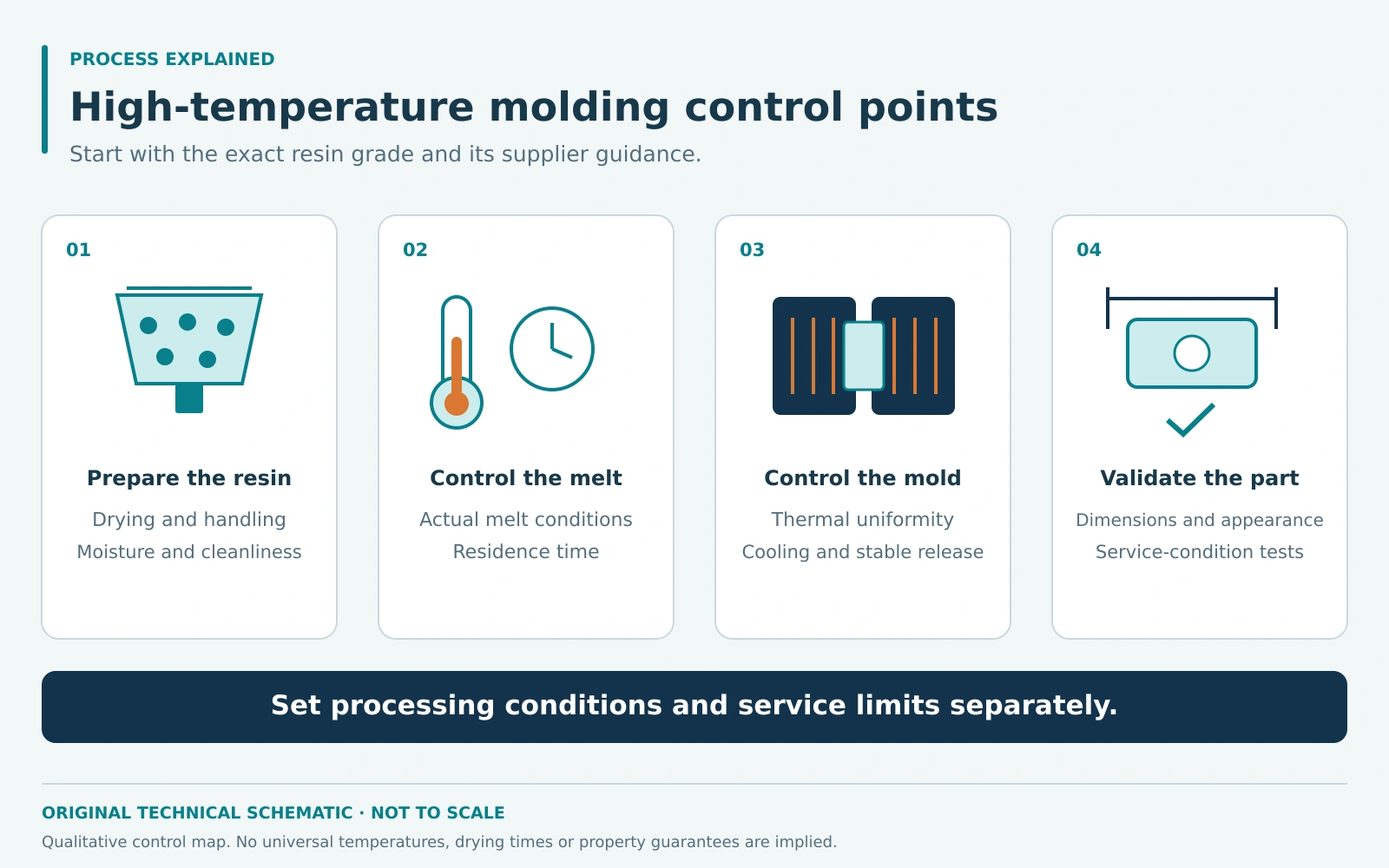
Hochtemperatur-Spritzgießen erfordert, dass ein bestimmter Harztyp sowohl auf den Produktionsprozess als auch auf die vorgesehene Einsatzumgebung abgestimmt wird. Understand the differences among common…
Read article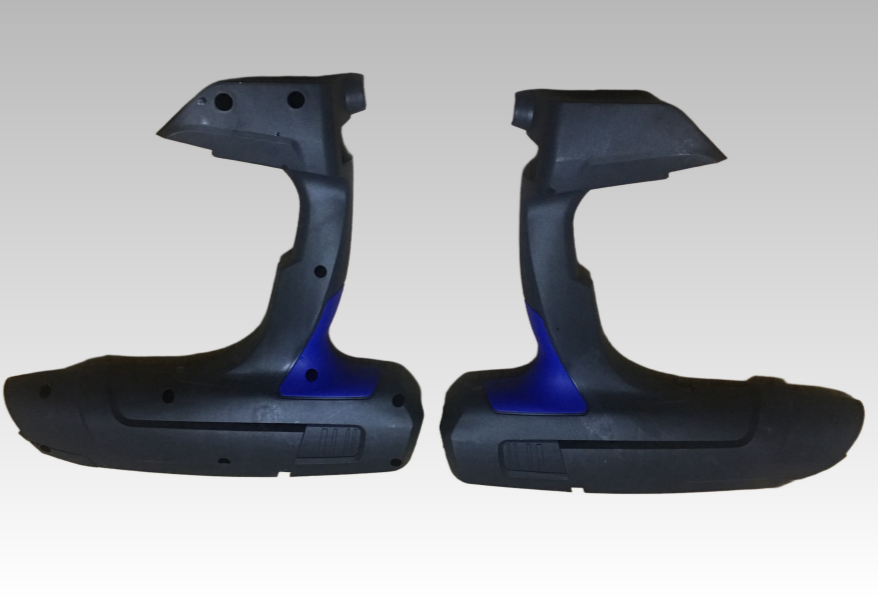
Zweifach-Spritzgießen kombiniert zwei Materialien oder Farben in einer koordinierten Spritzgießfolge. Entdecken Sie, wie Materialkompatibilität funktioniert, Substratuntersützung, Absperr-Design, and differential shrinkage…
Read article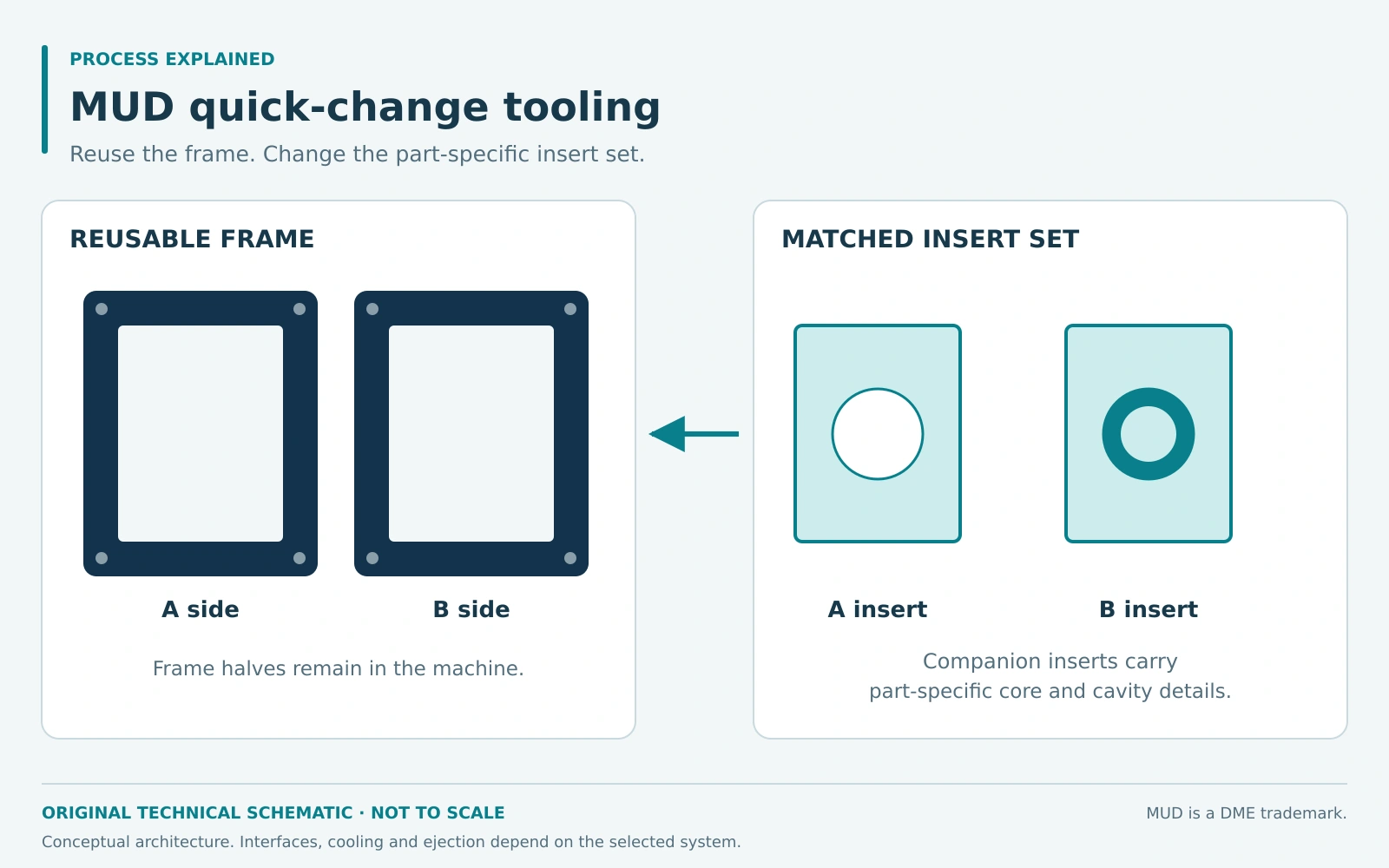
MUD steht für Master Unit Die, ein modulares Werkzeugsystem, das einen wiederverwendbaren Rahmen mit austauschbaren Metallformeinsätzen kombiniert. Discover how the system…
Read articleShare your part requirements and the decisions you want to review.