


Gas assist injection molding can address a familiar design problem: a plastic component needs substantial ribs or a thick handle, but a solid section adds weight and can develop sink marks. Introducing pressurized nitrogen into selected areas of the melt creates internal channels while helping hold the plastic against the mold surface.
The process is most useful when the part geometry and gas path are designed together. A hollow section alone does not guarantee a stronger, lighter, or more attractive finished product.
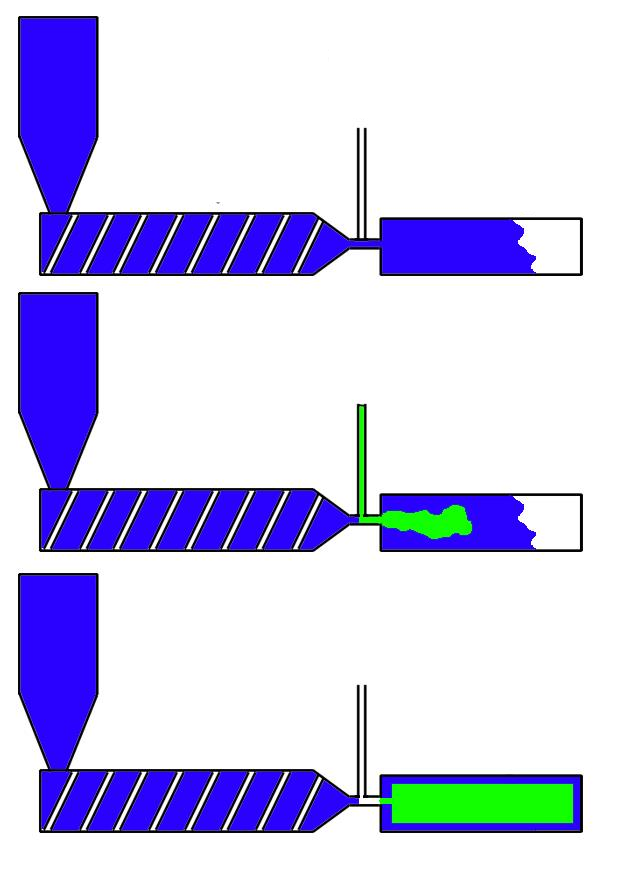
How internal gas assist works
This overview focuses on internal gas assist, in which gas enters the plastic itself. Nitrogen is normally used. The tool includes appropriate gas entry points and a controlled means of releasing the gas before the part is removed.
- Inject a controlled resin shot. In a short-shot process, plastic initially fills only part of the cavity. Other variants use a more complete resin fill, so one fill sequence does not describe every application.
- Introduce nitrogen. Gas follows the more fluid regions inside designated thick sections, displacing molten resin and forming a channel. Timing, resin quantity, and the pressure profile affect penetration.
- Maintain pressure during cooling. The gas helps compensate for shrinkage as the surrounding plastic solidifies.
- Release gas and eject. The system depressurizes through its designed venting route before the mold opens and the part is removed.
Where the process can help
Handles, furniture components, appliance parts, and automotive components can contain sections suited to gas-assisted hollowing. Removing resin from a thick core can lower material consumption and part weight relative to an equivalent solid design. Gas pressure can also reduce sink associated with heavy ribs or other local thickness changes.
Some applications gain shorter cooling cycles or lower clamping-force requirements. These are project-specific outcomes. The comparison should include part quality, tooling, gas equipment, process control, and operating costs rather than resin savings alone.
Design limits that need attention
Gas penetration and wall thickness
The channel does not behave like a precisely machined internal core. Resin flow and viscosity influence where the gas travels. Uneven penetration, incomplete filling, or gas breakthrough can occur when geometry and settings are poorly matched. Specify the remaining wall needed for the application and verify it on trial parts.
Structural and cosmetic performance
A hollow section changes the load-bearing geometry. Check stiffness, impact behavior, fastener loads, and other relevant requirements using the proposed design. Reduced sink does not automatically mean a flawless surface: appearance still needs its own acceptance criteria.
A useful gas-assisted design balances the remaining plastic wall, structural loads, apariencia, and production cost. Trial parts should establish the actual gas channel and performance before predicted savings are treated as production results.